Carved India
Best for
History Buffs, Architecture Lovers
Duration
6 Nights / 7 Days
Season
October–March
Difficulty
Easy
Vibe
Heritage, Culture
Carved India
6 Nights / 7 Days, 3 cities, From ₹38,600
per person, twin sharing
A Tibro Journey
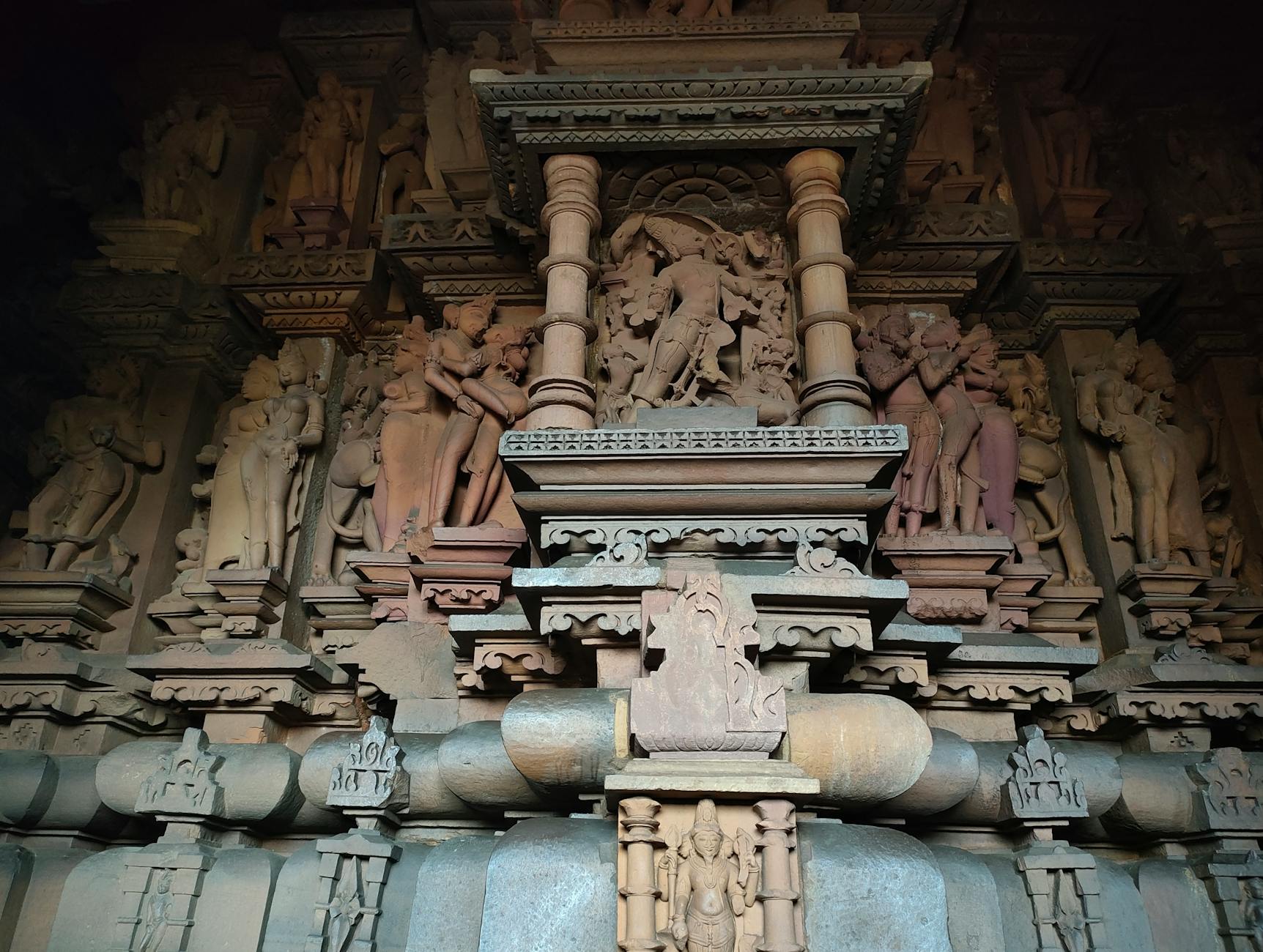
The three cities trace nine centuries of stone. Gwalior's fort, Orchha's cenotaphs on the Betwa, and Khajuraho, where every panel of the eleventh century is still readable if you know where to look.
Gems of Madhya Pradesh (6 Nights). Off Season is a heritage journey through Gwalior, Orchha, Khajuraho. 6 nights / 7 days that moves through Gwalior, Orchha, Khajuraho with private transport, hand-selected hotels, and a dedicated Tibro travel designer at every step.
Signature Moments
Three Mornings You'll Remember
No. 01
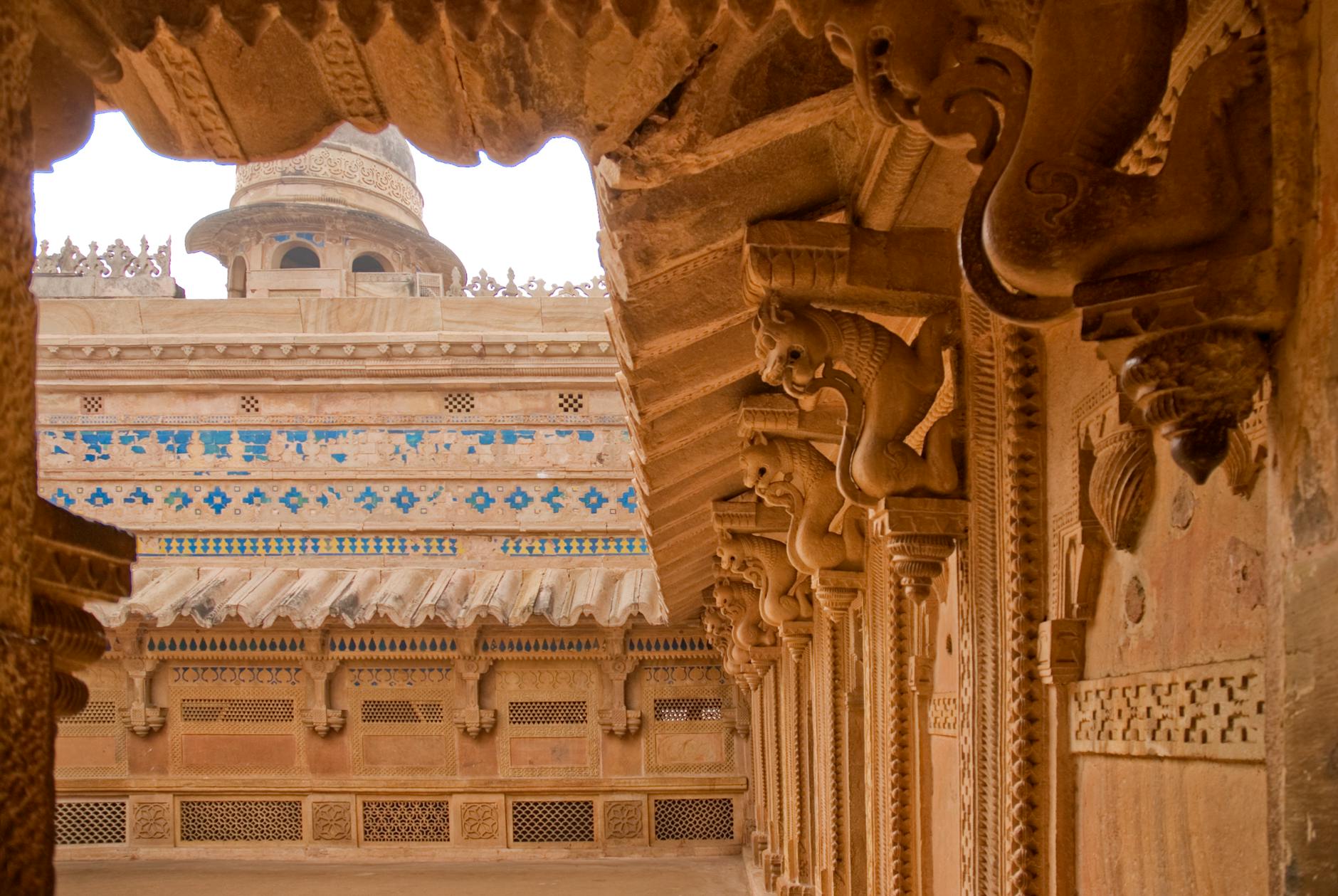
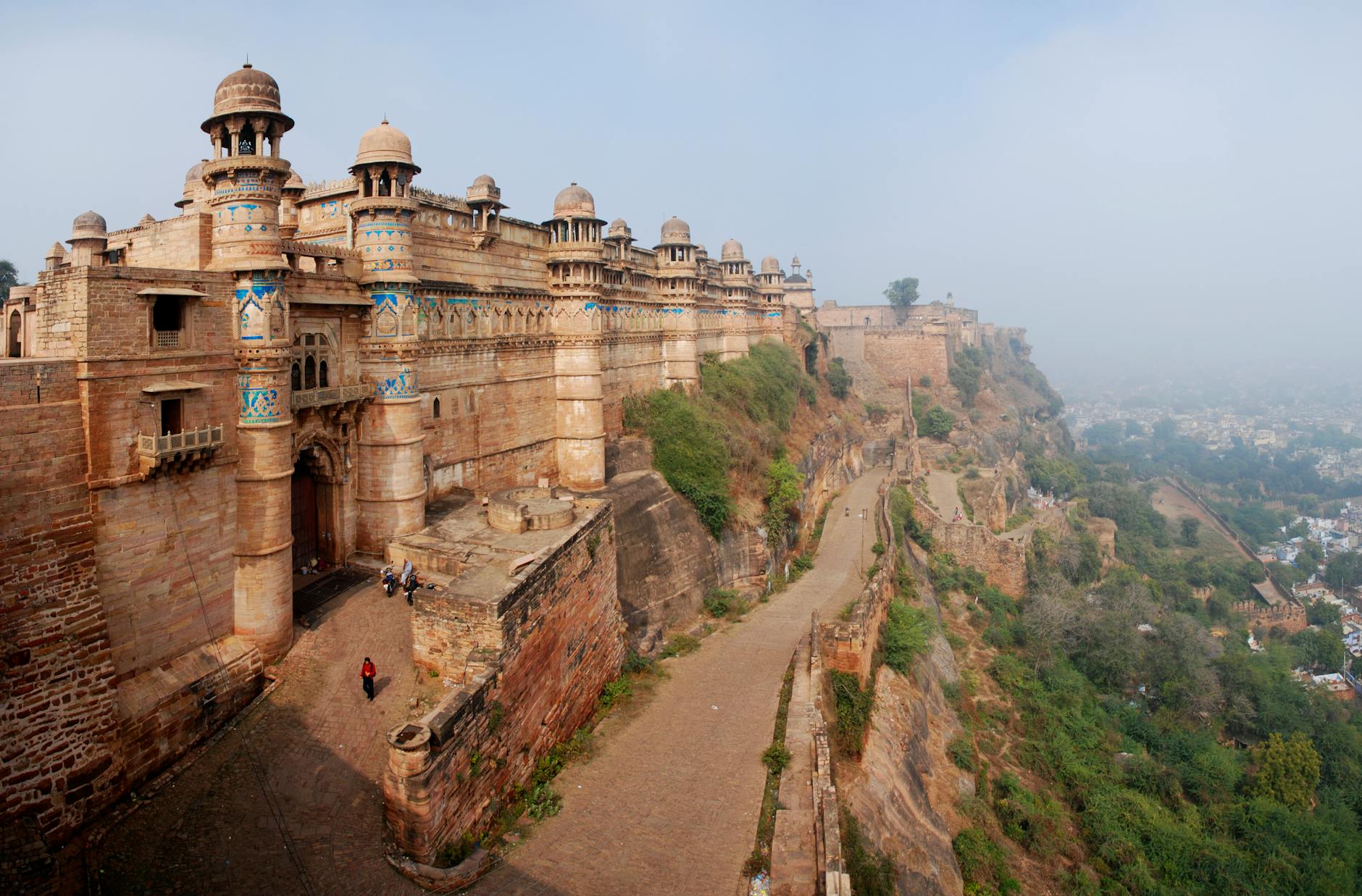
Gwalior Fort
One of India's most impregnable and historically rich forts.
No. 02
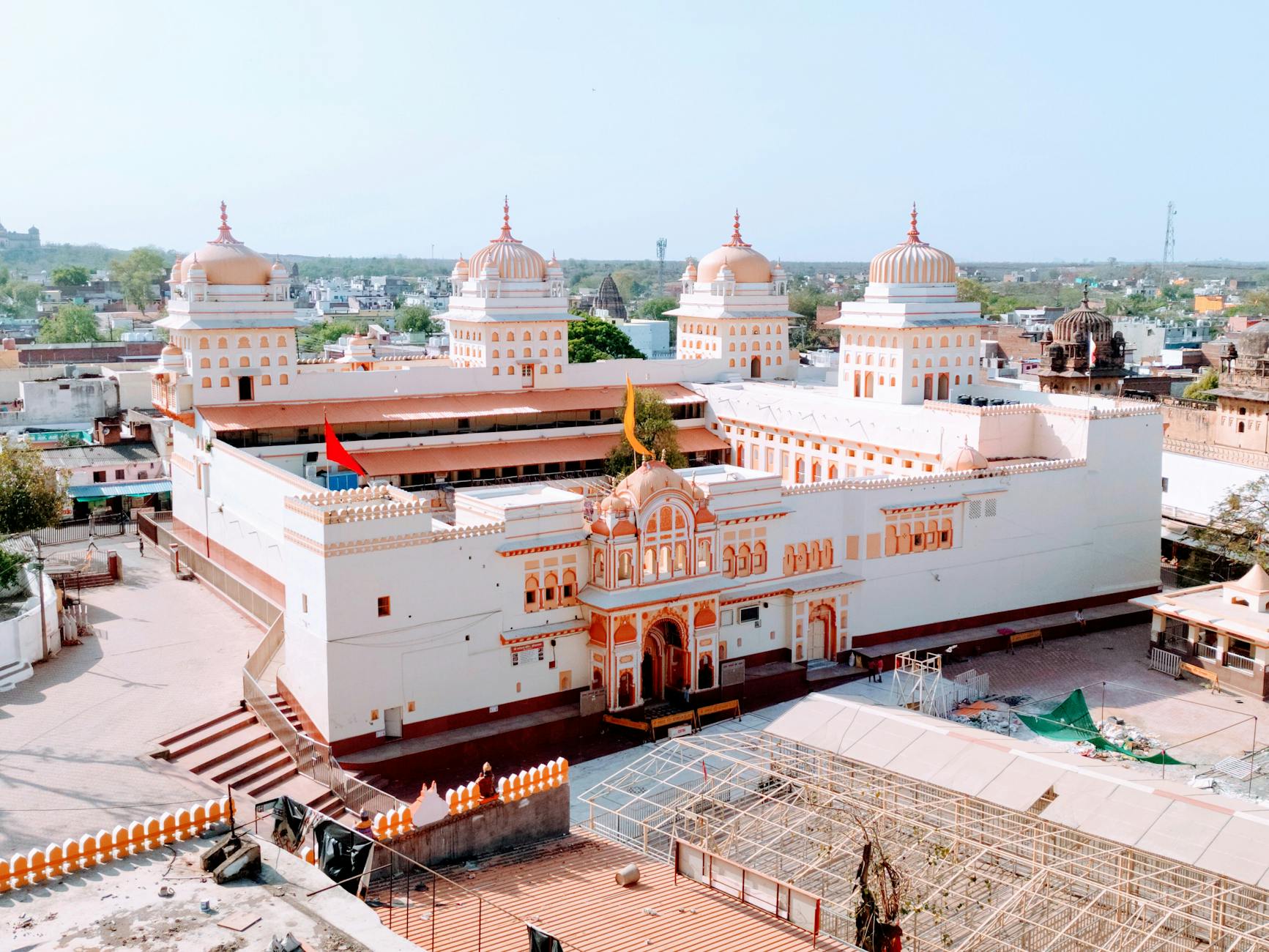
Orchha Ram Raja Temple
The only temple where Ram is worshipped as a king.
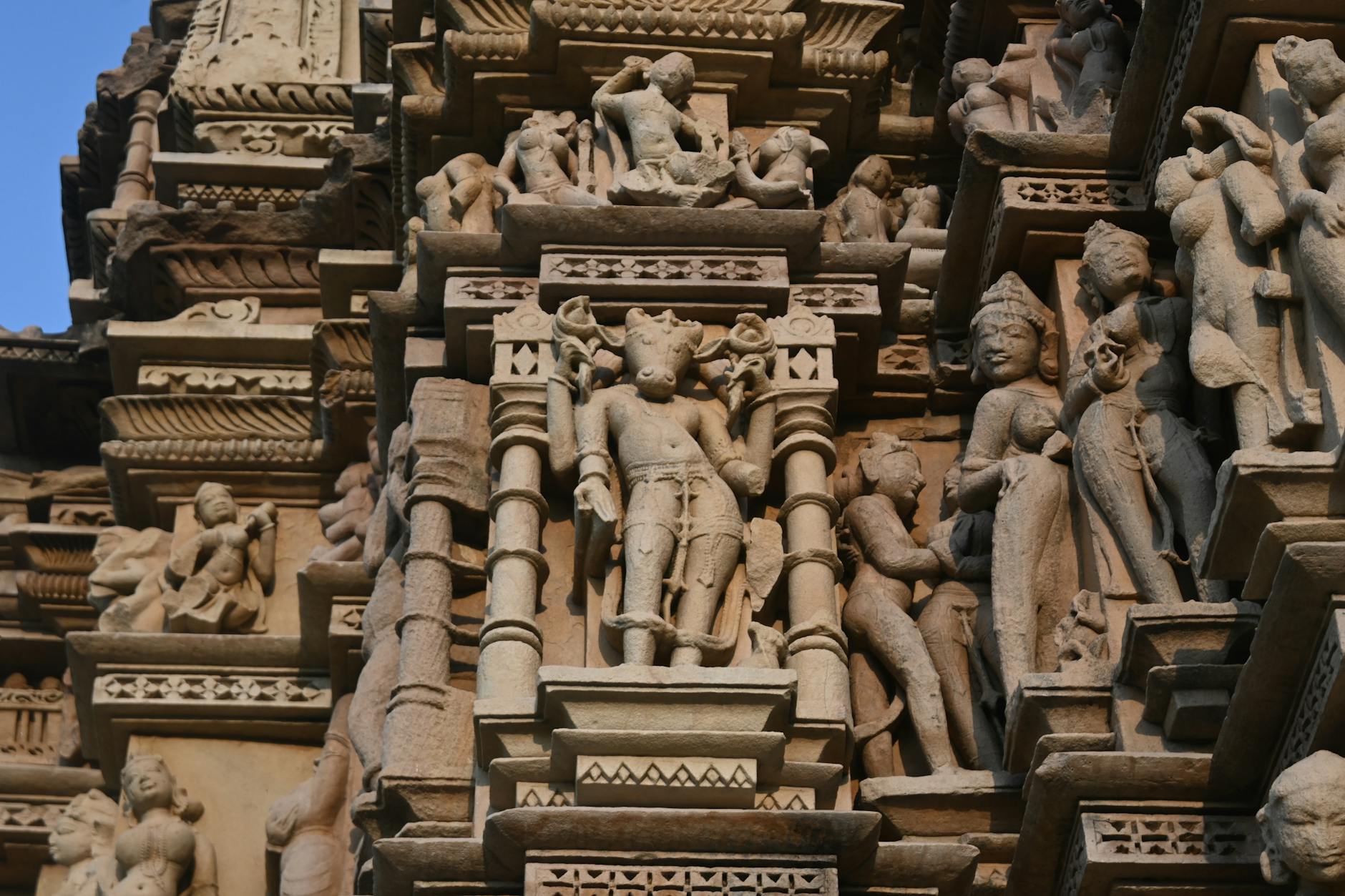
No. 03
Khajuraho Temples
UNESCO World Heritage temples, masterpieces of medieval Indian art.
No. 01
Gwalior Fort
One of India's most impregnable and historically rich forts.
No. 02
Orchha Ram Raja Temple
The only temple where Ram is worshipped as a king.
No. 03
Khajuraho Temples
UNESCO World Heritage temples, masterpieces of medieval Indian art.
Day by Day
6 Nights / 7 Days, in order
Day 1
Arrive Gwalior & Half Day Sightseeing
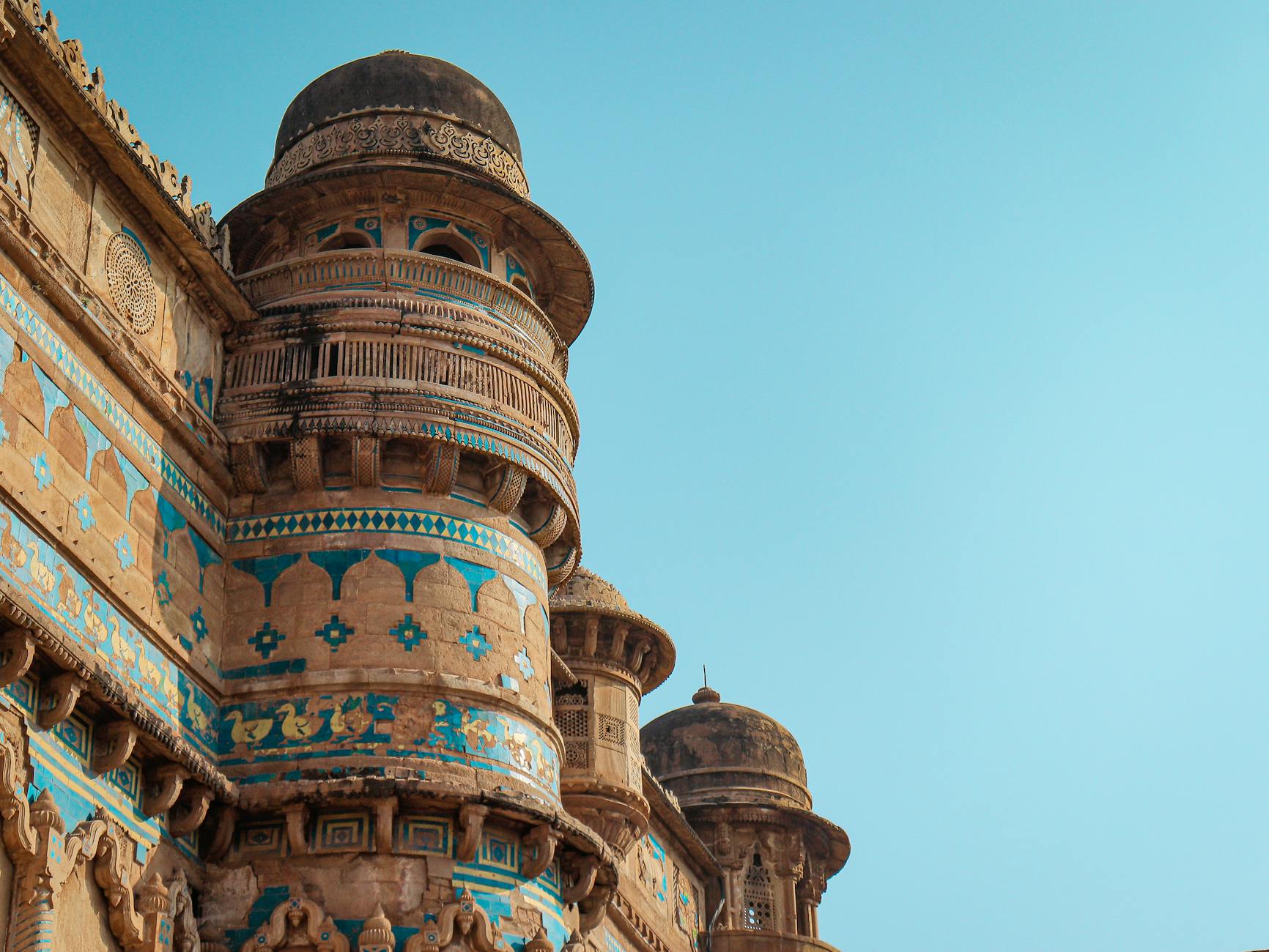
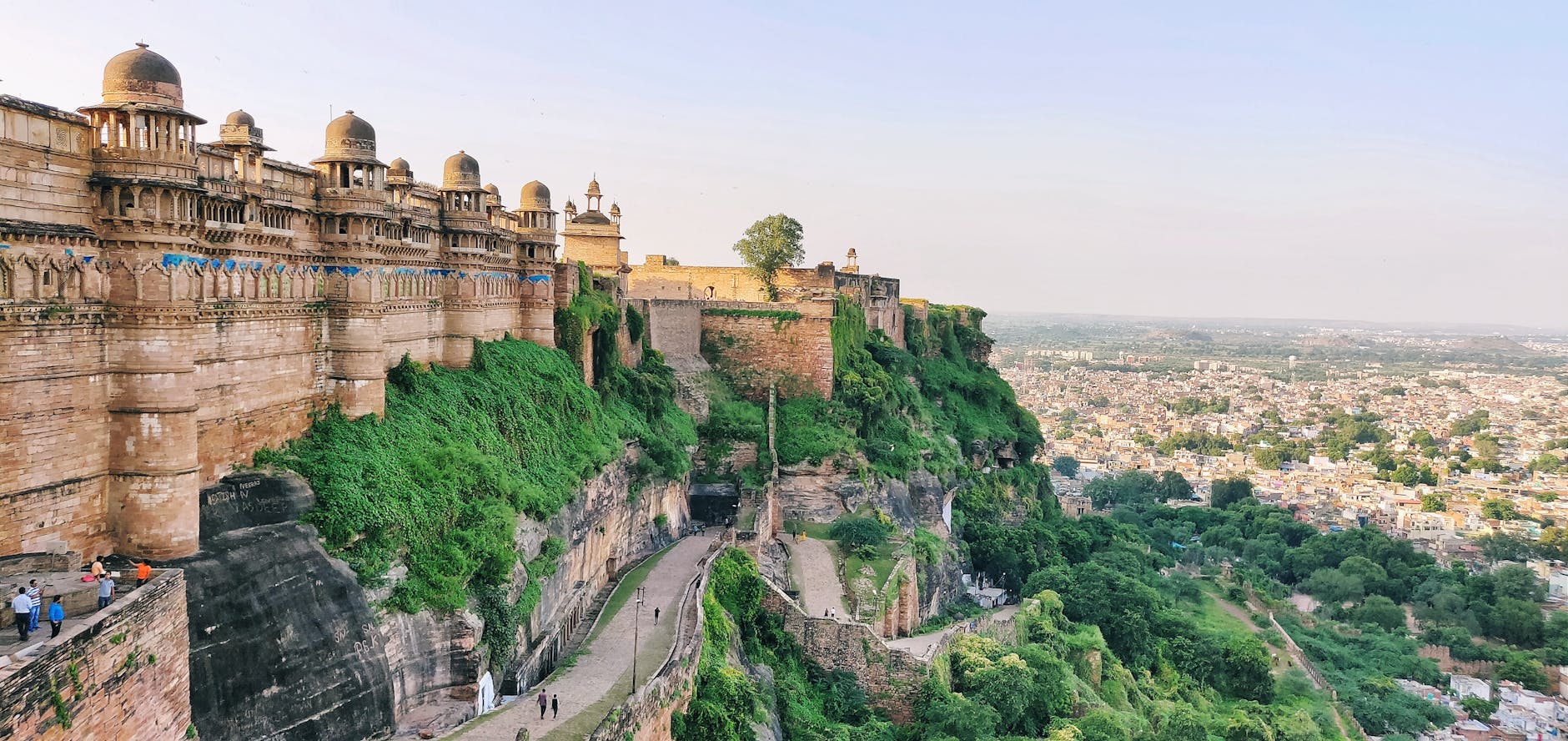
Pick up from Gwalior Airport/Railway Station and transfer to the Hotel. Check in to the Hotel. Later Proceed to visit Gwalior fort and Jai Vilas palace museum with Guide. Overnight stay at the Gwalior hotel. Gwalior Fort has existed at least since the 10th century, and the inscriptions and monuments found within what is now the fort campus indicate that it may have existed as early as the beginning of the 6th century. The present-day fort consists of a defensive structure and two main palaces, "Man Mandir" and Gujari Mahal, built by Tomar Rajput ruler Man Singh Tomar (reigned 1486–1516 CE), the latter one for his wife, Queen Mrignayani. The second oldest record of "zero" in the world was found in a small temple here in fort. Jai Vilas Palace was built in 1874 by Jayajirao Scindia, the Maharaja of Gwalior in the British Raj while the major part of the palace is now the "Jiwajirao Scindia Museum" which opened to the public in 1964, a part of it is still the residence Scindia family. The Palace is 124,771 square feet and it is known for its large Durbar Hall. The interior of the Durbar Hall is decorated with gilt and gold furnishings and adorned with a huge carpet and gigantic chandeliers.
Day 2
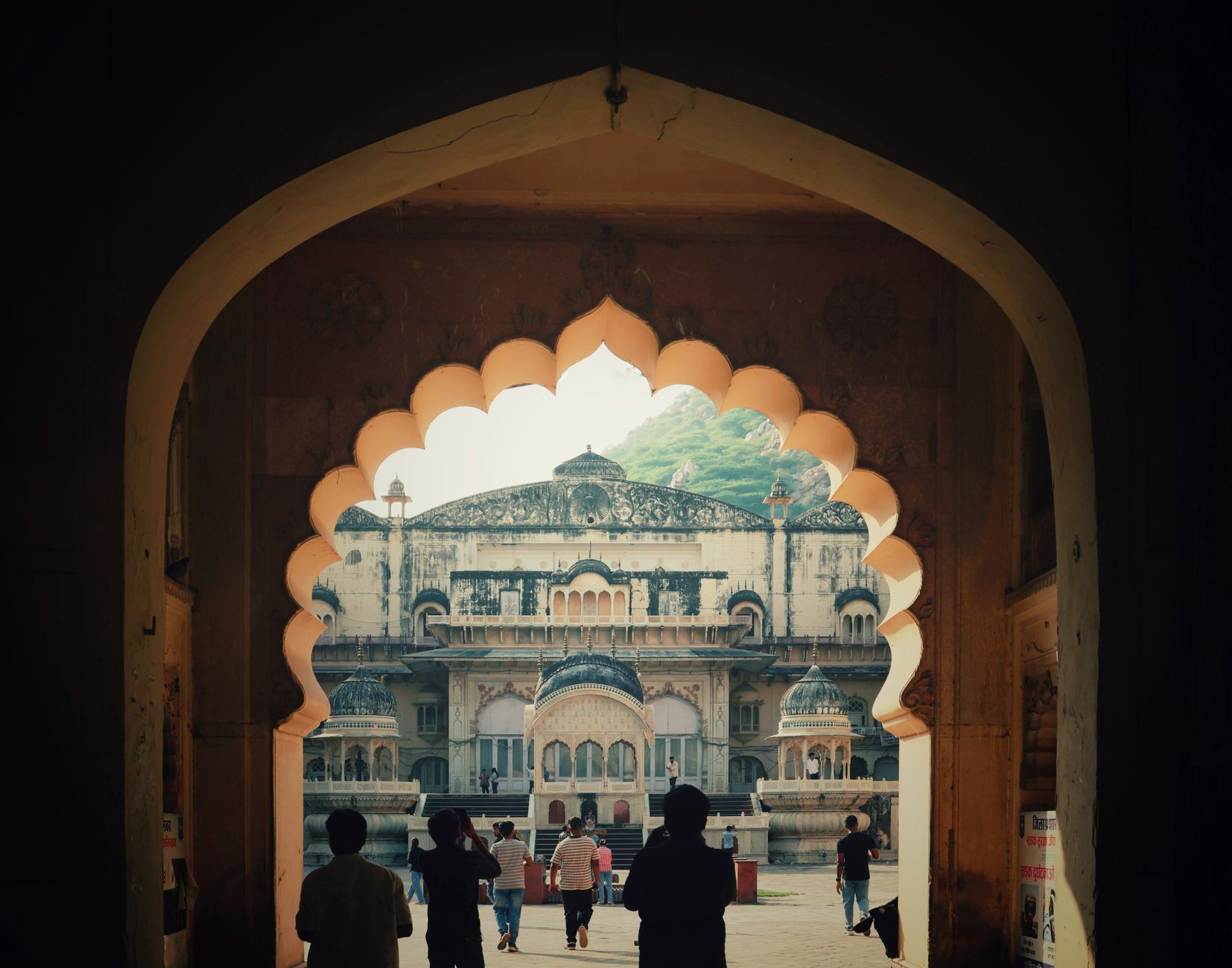
Sightseeing of Hidden Gems Around Gwalior
After breakfast proceed for Morena. Visit Mitawali, Padavali and Bateshwar which are the beautiful set of heritage structures dating back to the 8th-10th century, during the Gurjara- Pratihara dynasties. Later back to Gwalior. Night stay in Gwalior. Chausath Yogini Temple. The temple is also known as Ekattarso Mahadeva Temple. It is believed that the temple was built by the Kachchhapaghata king Devapala in the 11th century. It is said that this temple was the inspiration behind the Parliament House. Padawali Fort: The Jat Ranas of Dhaulpur built the Padawali fort in the 18th century. The fort also has a temple that once served as a divine place to worship Lord Shiva. Through inscription and detailing of the architecture of the Padavali fort temple, it has something to convey about the ancient era. Bateshwar: It is a group of about 200 Hindu temples made of sandstone. The temples were built by the Gurjara kings in the Morena district of Madhya Pradesh between the 8th to 10th centuries. All the temples are mostly small and are spread over 25 acres of land. Temples are dedicated to Shiva, Vishnu, and Shakti – representing the three major traditions within Hinduism.
Day 3
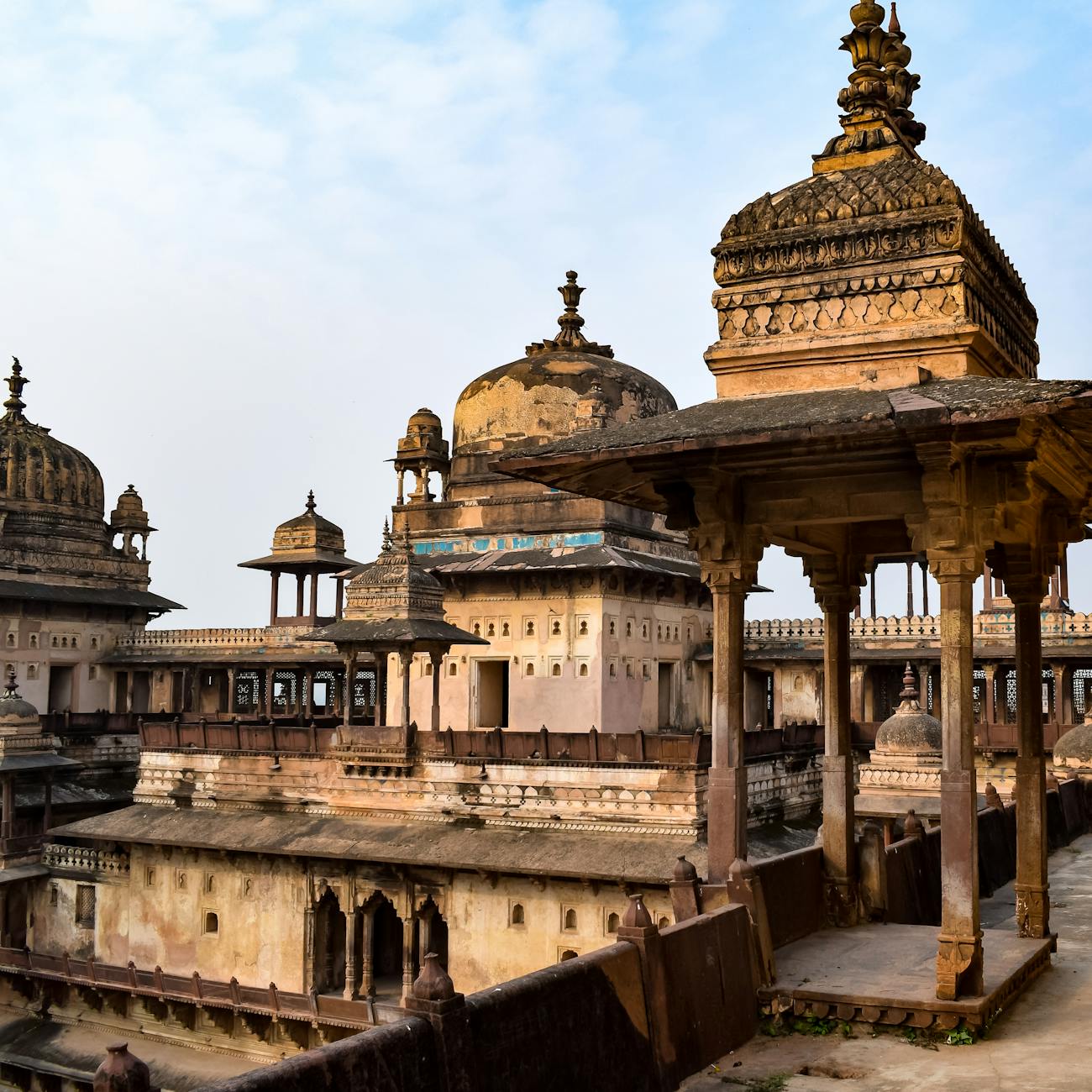
Gwalior – Datia – Jhansi - Orchha
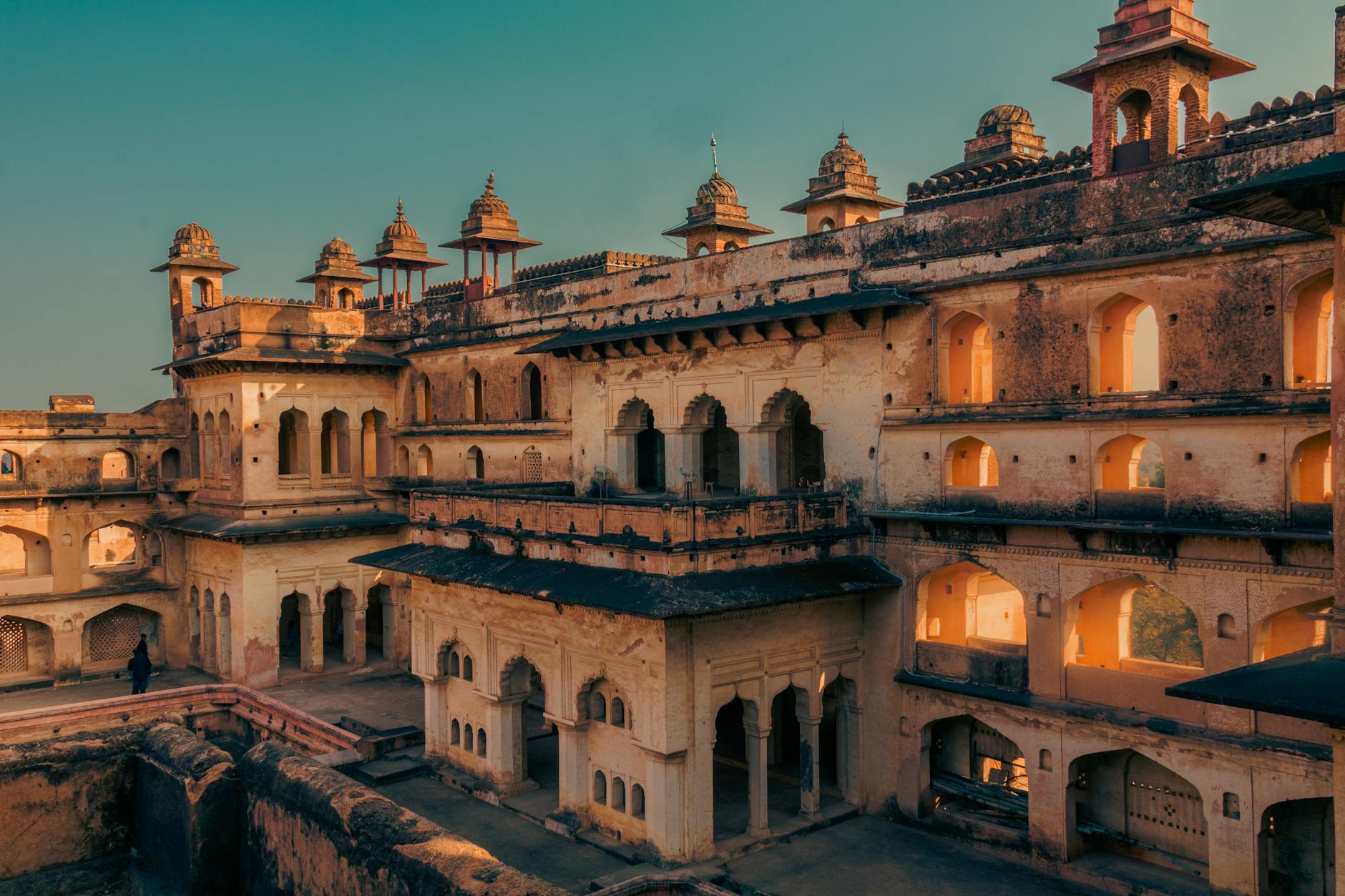
Morning transfer to Orchha. En-route visit Datia Palace and Jhansi Fort. On reaching Orchha, check-in at hotel. Evening at leisure, or you can plan to take a walk around this small-town set around a river. Overight stay at Orchha. Datia Palace, also known as Bir Singh Palace or Bir Singh Dev Palace. The specialty of the palace is that it has 7 floors, and no member of the royal family lived in the palace. This Palace was made by spending 35 Lakh Rupees (78 thousand US dollars), and it took nine years to build it. It is situated on an isolated rock on the western side of the city Datia. It represents Mughal architecture along with Rajput architecture. Jhansi Fort The construction of the Jhansi fort is ascribed to the Bundela Rajput chief and the ruler of the kingdom of Orchha Veer Singh ji Deo Bundela in 1613. It is one of the strongholds of the Bundelas. The granite walls of the fort are between 16 and 20 feet thick and on the south side, the city walls meet. The south face of the fort is almost perpendicular. Nearby is the Rani Mahal, built in the later half of the 19th century where there is now an archaeological museum.
Day 4
Orchha Full Day Sightseeing
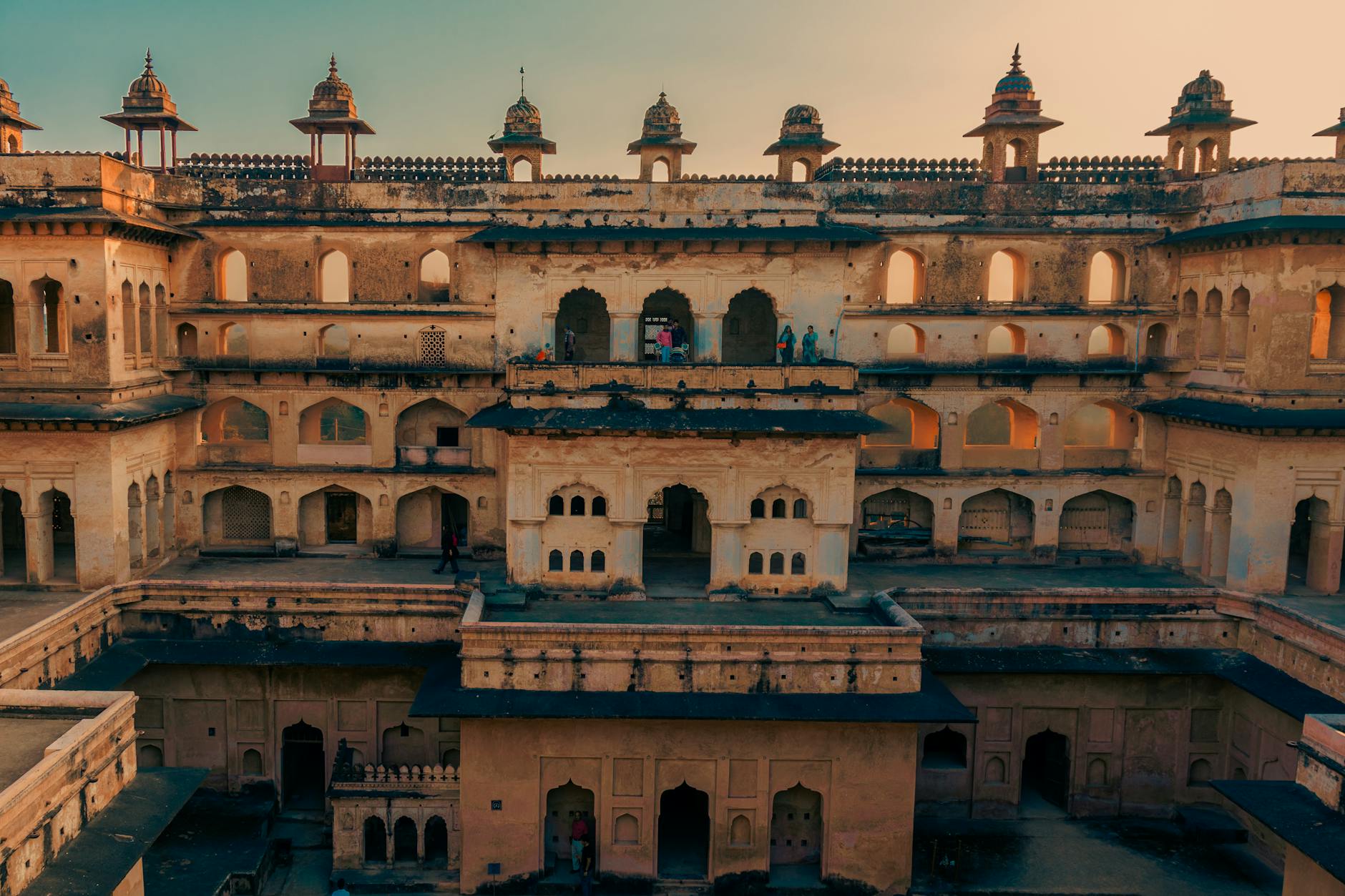
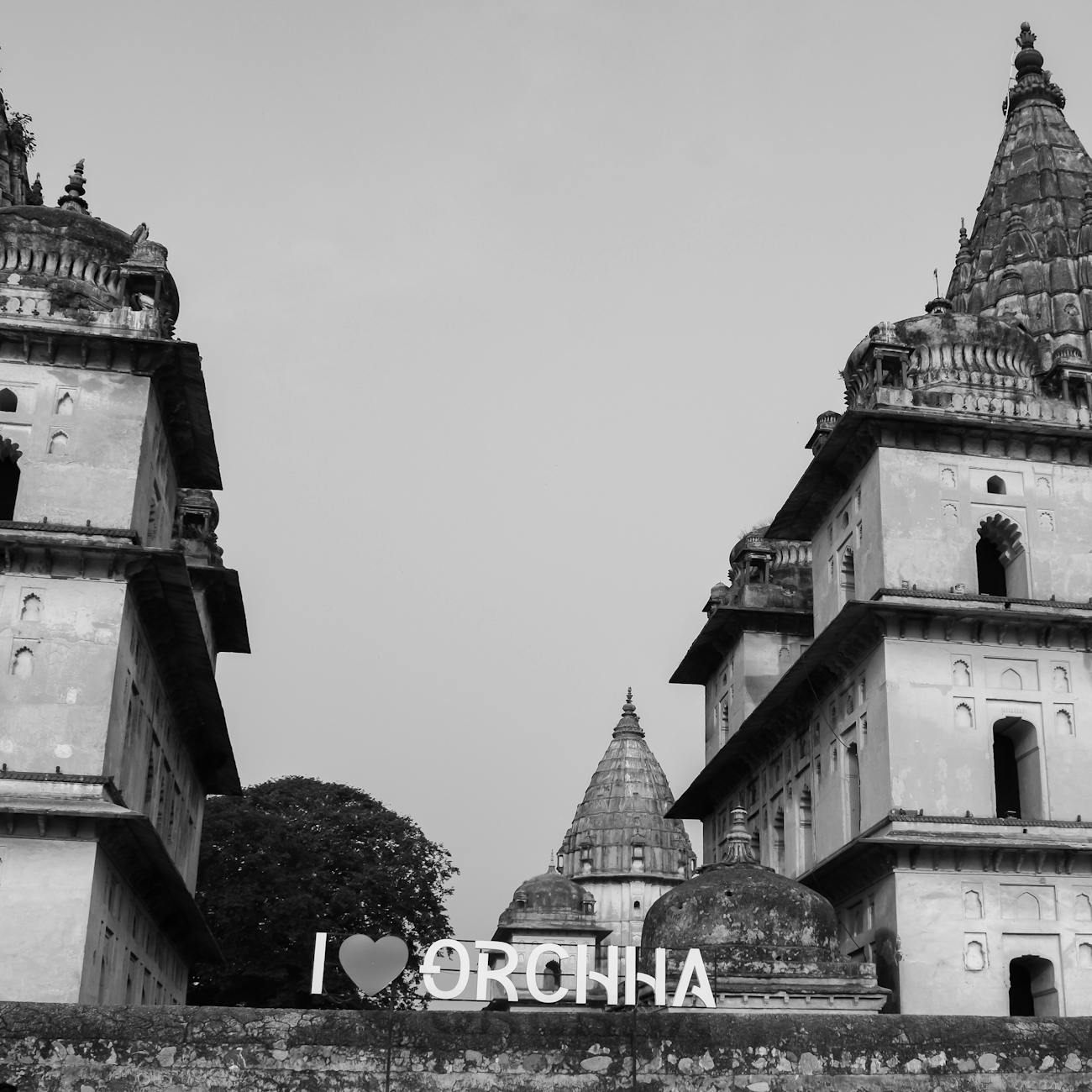
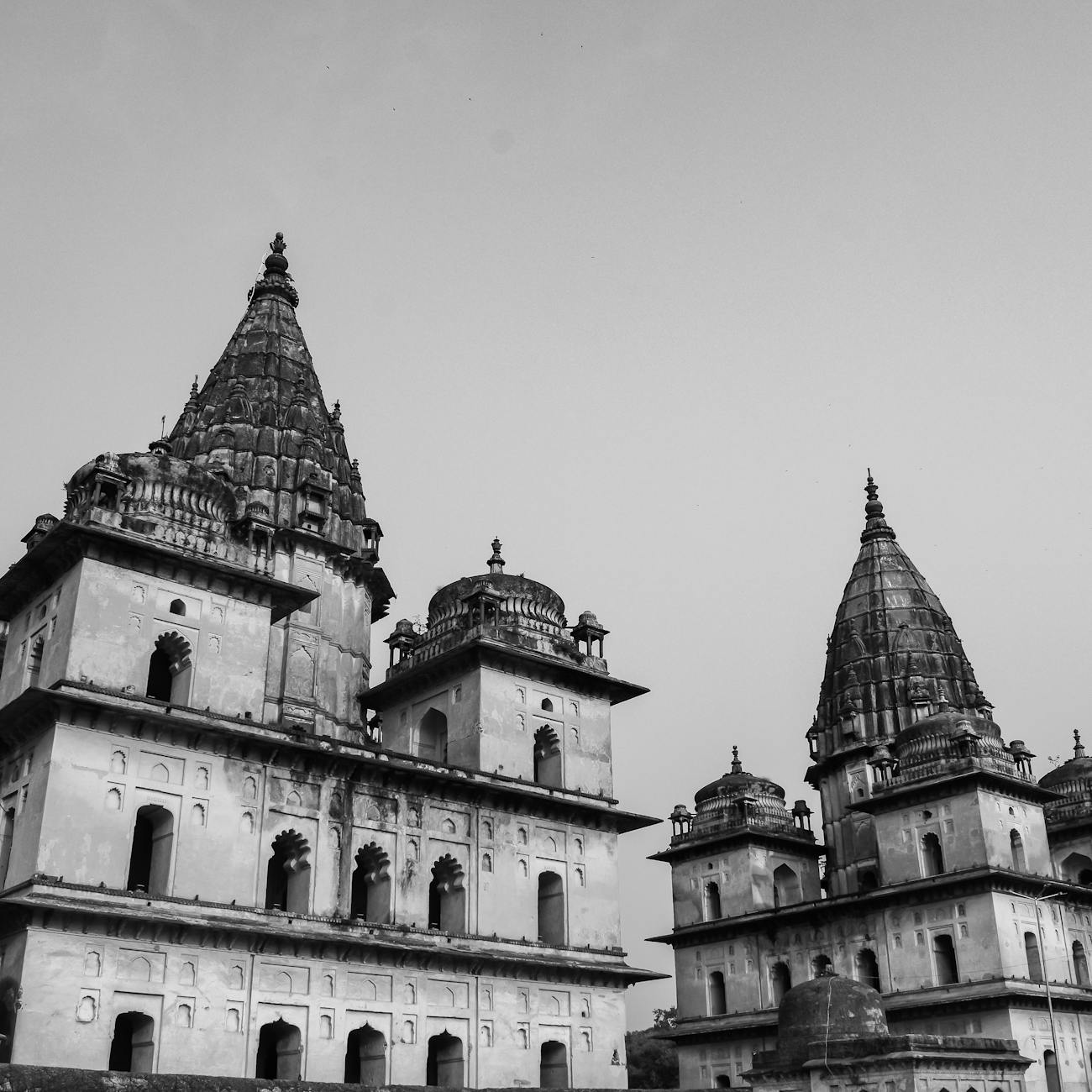
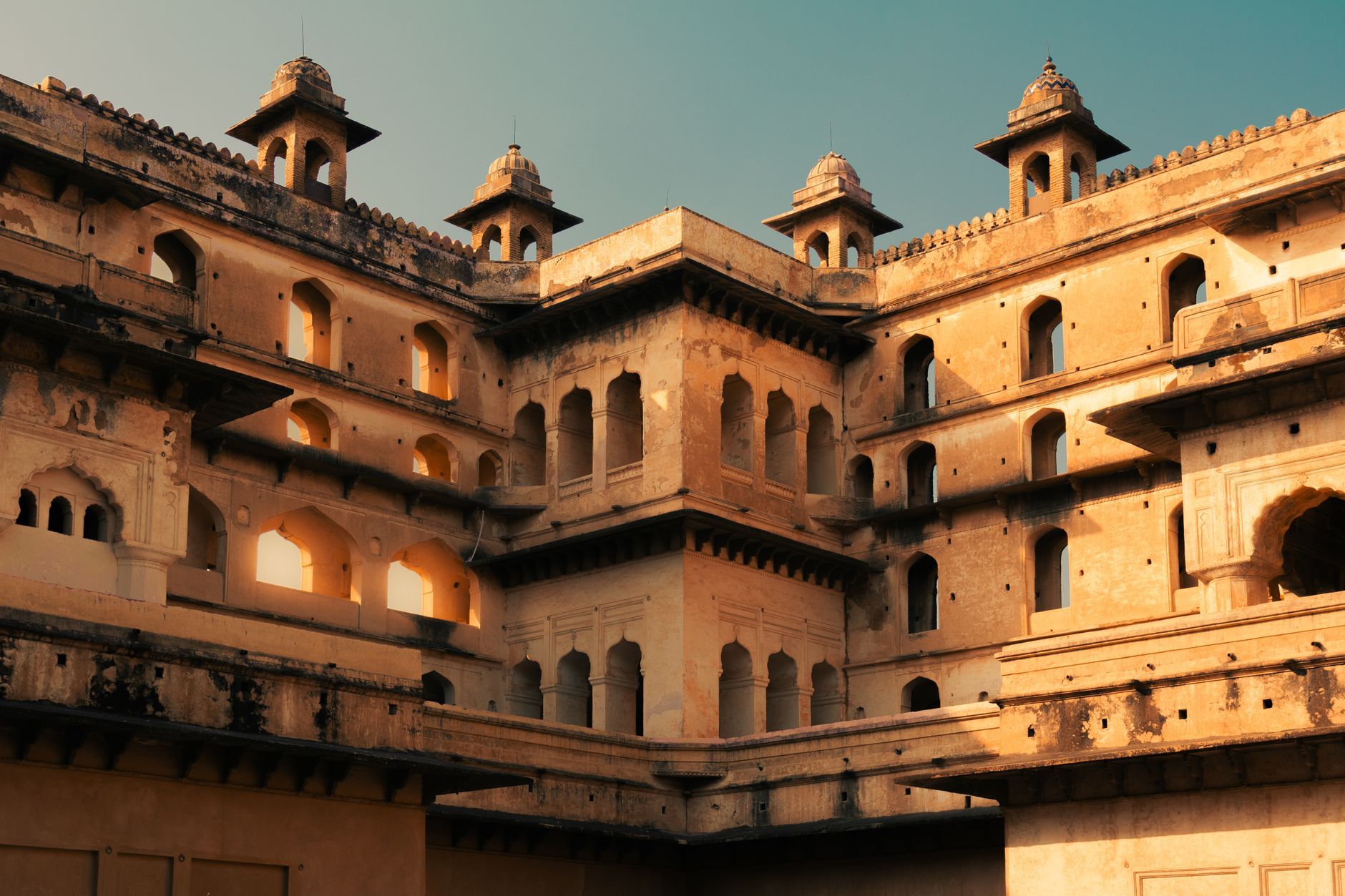
After Breakfast, proceed to visit Orchha Fort with a Guide - Jahangir Mahal, Raja Mahal, Sheesh mahal and Ram Raja Mandir. Evening Visit Light and Sound Show Orchha Fort. Night stay in Orchha. The Orchha Fort, which houses many ancient monuments consisting of the fort, palaces, temple, and other edifices. The fort was built following the founding of the Orchha State in 1501 AD by Rudra Pratap Singh (r. 1501–1531), a Bundela Rajput. The palaces and temples within the fort complex were built over a period by successive Maharajas of the Orchha State. Jahangir Mahal is a palace that was exclusively built by Bir Singh Deo in 1605 to humor the Mughal emperor Jahangir who was a guest of the Maharaja for one night only. The palace is built in four levels with architectural features of both Muslim and Rajput architecture. Its layout is a symmetrical square, built in the inner courtyard of the fort, and has eight large domes. It provides views of the temples and the Betwa River outside the fort complex. Raja Mahal: The Raja Mahal (King's Palace), where the kings and the queens had resided till it was abandoned in 1783,[6] was built in the early part of 16th century. Its exterior is simple and unembellished, but the interior chambers of the palace are elaborately royal in their architectural design, decorated with murals of social and religious themes of gods, mythical animals, and people. Sheesh Mahal: Sheesh Mahal is flanked on either side by the Raja Mahal and the Jahangir Mahal. This has royal accommodation, which was built for King Udait Singh. It has now been converted into a hotel. Ram Raja Temple: A part of Raja Mahal was converted into a temple and named Rama Raja Temple in honour of the god Rama. According to a local legend, the temple was built following Rani Ganeshkuwari, the queen getting a "dream visitation" by Lord Rama directing her to build a temple for Him. Following this, a new temple known as the Chaturbuj Temple was approved to be built, and the queen went to Ayodhya to obtain an image of Lord Rama that was to be enshrined in her new temple. In India this is the only temple where God Rama is worshiped as a king and that too in a palace. A Guard of Honour is held every day, police personnel have been designated as Guards at the temple, much in the manner of a king. Armed salutation is provided to God Ram every day.
Day 5
Orchha to Khajuraho
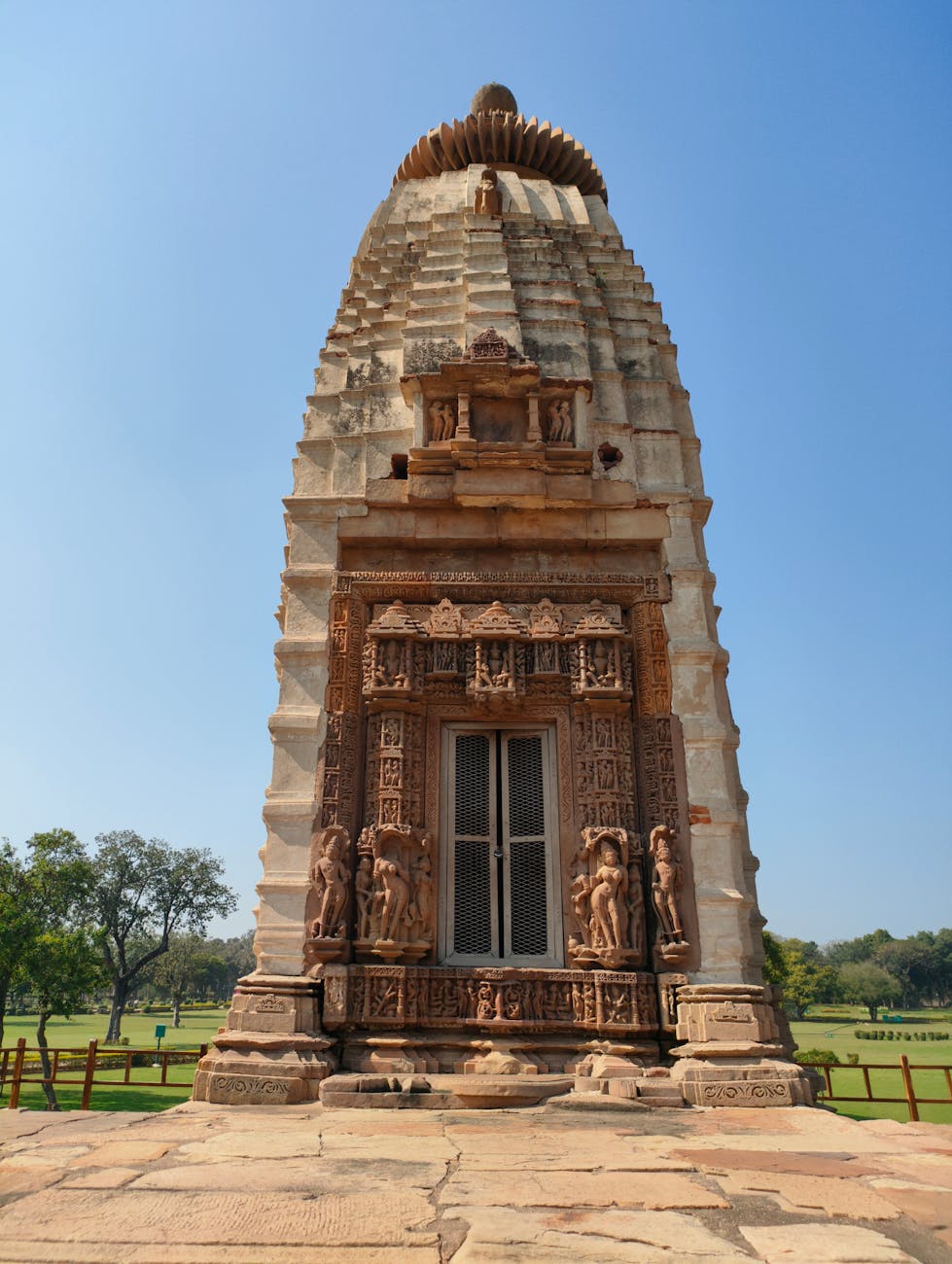
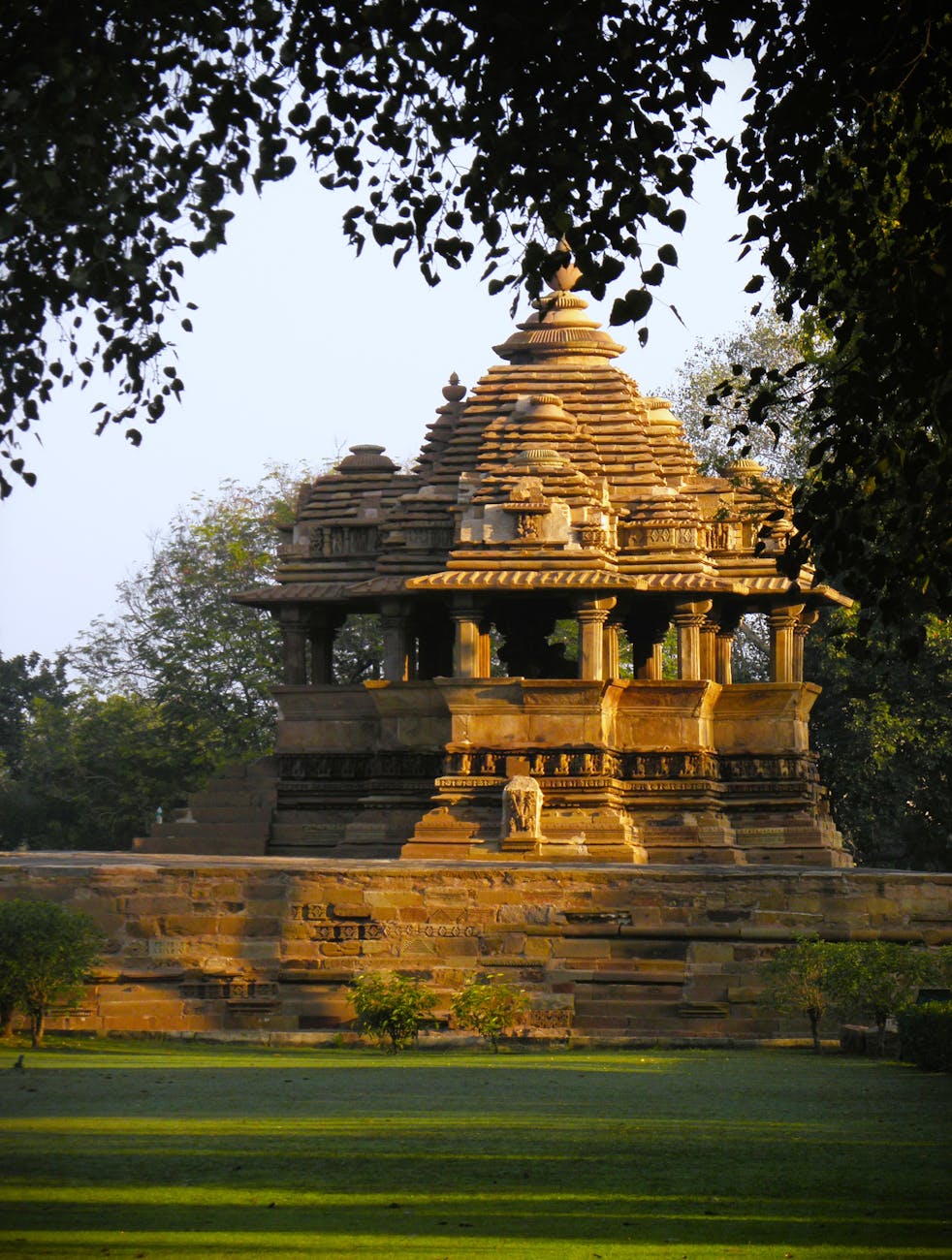
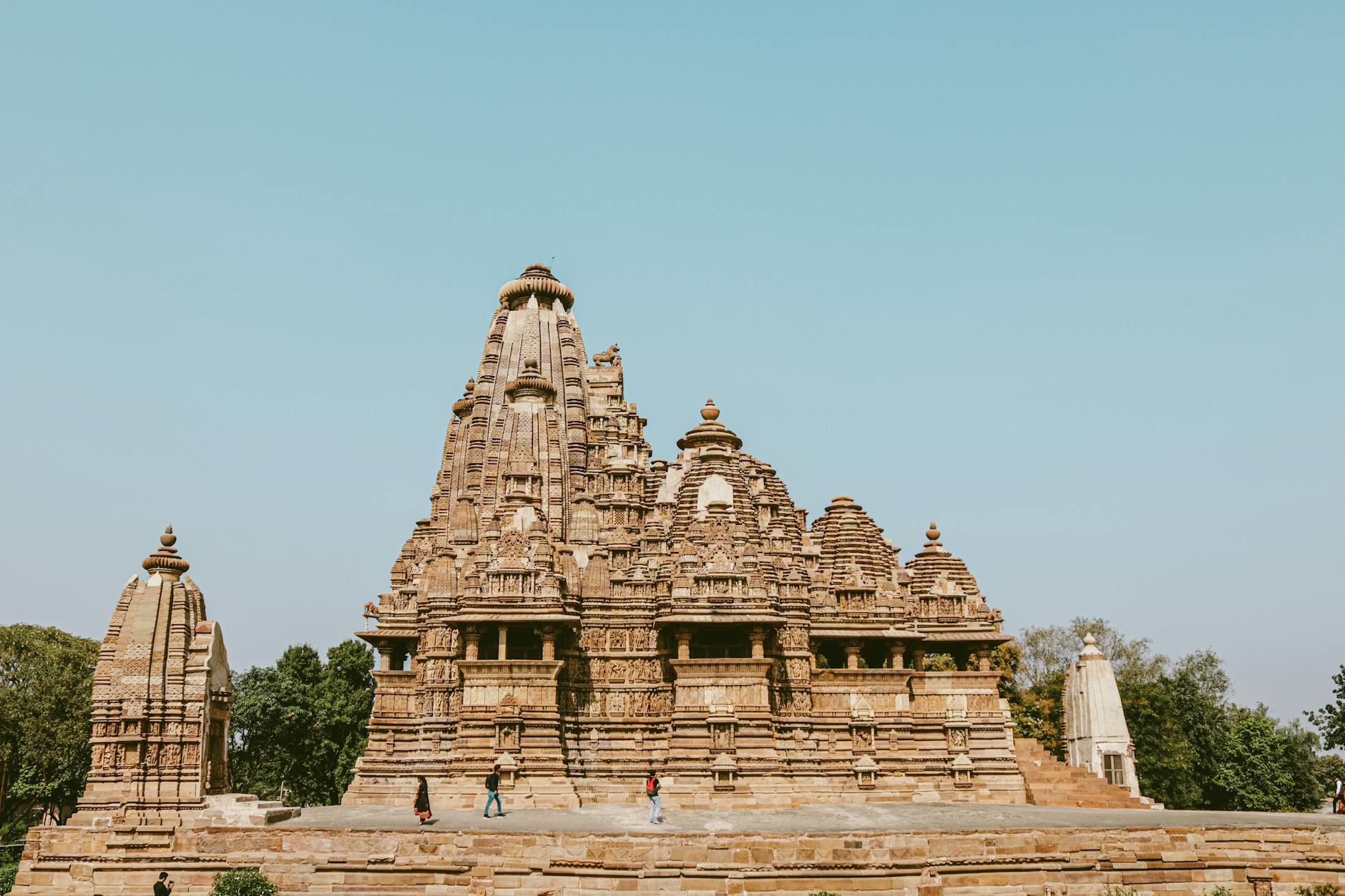
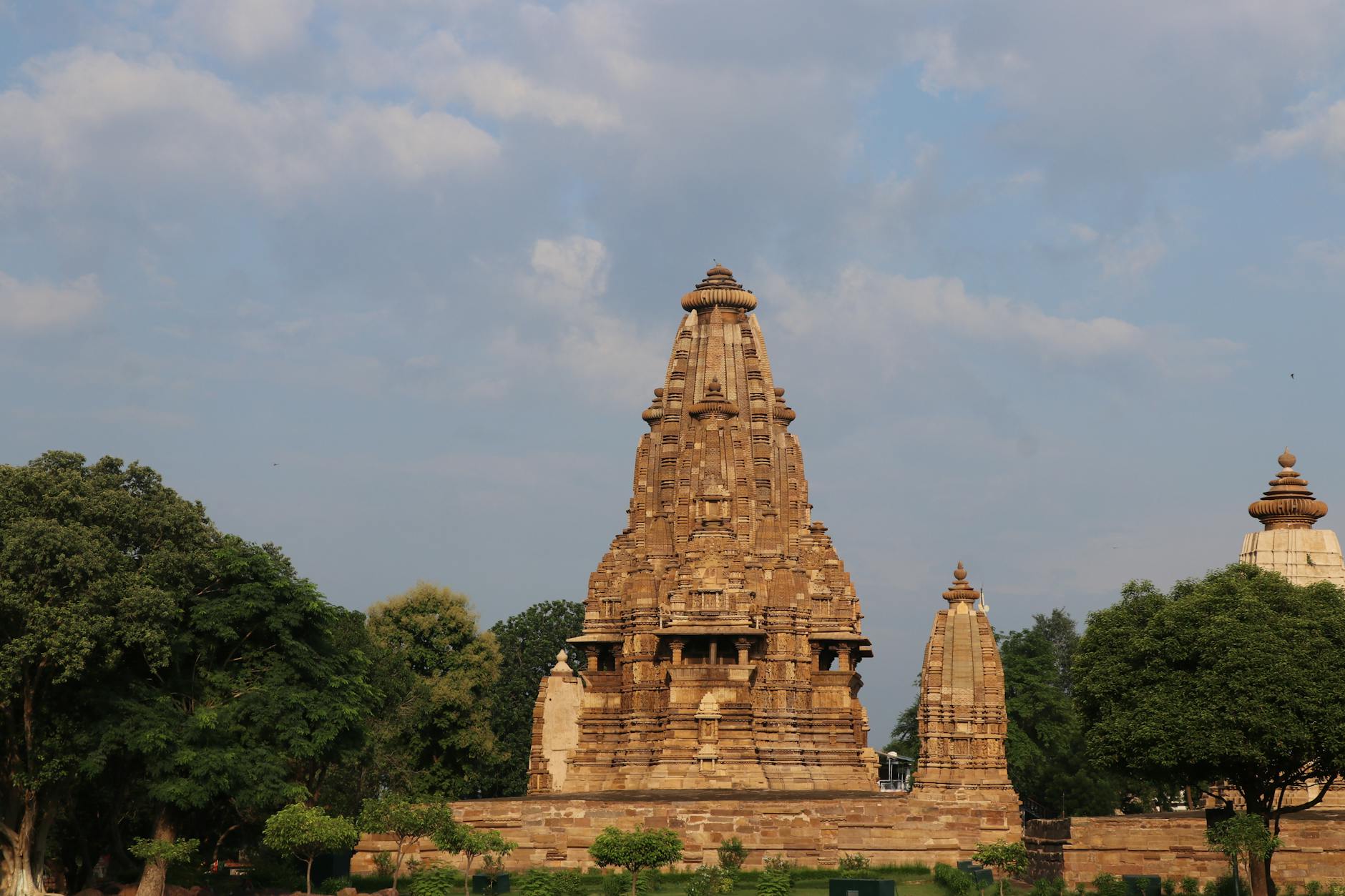
Morning Proceed to Khajuraho. Check in to the Hotel. Later Proceed to visit Western and Eastern groups of Temple (UNESCO World Heritage Site). Later visit Raneh fall and Ken Gariyal century. Evening visit Light and Sound show. Overnight stay at Khajuraho Hotel. The Western and Eastern Groups of Temple: The temples at Khajuraho were built during the Chandella dynasty, which reached its apogee between 950 and 1050. Only about 20 temples remain; they fall into three distinct groups and belong to two different religions – Hinduism and Jainism. They strike a perfect balance between architecture and sculpture. The Temple of Kandariya is decorated with a profusion of sculptures that are among the greatest masterpieces of Indian art. The temple site is within Vindhya Mountain range in central India. The temple complex reflects the ancient Hindu tradition of building temple. Raneh Fall & Ken Gharial Sanctuary: The Ken Gharial Sanctuary is located at the confluence of the Ken and Khudar rivers further down from Reneh Falls. The Ken River here runs through a narrow gorge of igneous rocks rich in Granite and Dolomite. Sanctuary was established for the conservation of gharial and mugger crocodile populations in 1981.
Day 6
Khajuraho – Panna Safari – Khajuraho
After breakfast, proceed for Panna Safari. 02:00 PM Afternoon Jeep Safari at Panna National Park by Exclusive Gypsy. Later back to Khajuraho. Night stay in Khajuraho. Panna National Park was declared as one of the Tiger reserves of India in 1994/95 and placed under the protection of Project Tiger. The forests of Panna National Park along with Ken Gharial Sanctuary and adjoining territorial divisions form a significant part of the catchment area of the 406 km Ken River, which runs northeast for about 72 km through the park. Panna National Park and the surrounding forest area of North and South Panna Forest division is the only large chunk of wildlife habitat remaining in northern Madhya Pradesh. The reserve provides significant habitat for the Bengal tiger. Other resident animals in the reserve include the caracal or siyah gosh and the jungle cat. Over 280 species of birds have been recorded, including the Indian paradise flycatcher. Afternoon Safari Drives Will Not Be Conducted On Wednesdays
Day 7
Khajuraho – Departure
After breakfast you will proceed to Khajuraho Airport / Railway station for your onward Journey. PACKAGE COST PER PERSON
Where You'll Stay
Hand-Picked Hotels
Gwalior
Tansen Residency
Orchha
Betwa Retreat
Khajuraho
Payal
Gwalior
Tansen Residency
Orchha
Betwa Retreat
Khajuraho
Payal
Honestly
Things most travel sites won't tell you.
On-the-ground details your designer wishes every guest knew before they landed.
Things to Look Out For
India is not one country, climate-wise
Rajasthan in February reads dry-cold; Kerala in February reads humid-warm; Sikkim in February might be under snow. Pack for the specific itinerary, not 'India in general'. Tibro's per-state tours are tuned to one climate at a time. Don't try to chain three of them back-to-back.
Tipping is structured, not arbitrary
Driver tips at ₹500-1000 per day, guide tips at ₹500-1000 per half-day, hotel housekeeping ₹100 per day, restaurant 10% on top of any service charge already listed. Hand the driver/guide an envelope on the last day rather than tipping daily. It is more dignified for them.
Tap water and ice are a real consideration
Every Tibro-tier hotel provides sealed bottled water in the room daily. Use it for brushing your teeth too. At restaurants, ask for "sealed bottled water" specifically. Some places will pour from a filtered jug, which is fine in some kitchens and not in others. Ice is the hidden trap; ask for "no ice" with cold drinks unless the hotel makes its own.
- №1
India is not one country, climate-wise
Rajasthan in February reads dry-cold; Kerala in February reads humid-warm; Sikkim in February might be under snow. Pack for the specific itinerary, not 'India in general'. Tibro's per-state tours are tuned to one climate at a time. Don't try to chain three of them back-to-back.
- №2
Tipping is structured, not arbitrary
Driver tips at ₹500-1000 per day, guide tips at ₹500-1000 per half-day, hotel housekeeping ₹100 per day, restaurant 10% on top of any service charge already listed. Hand the driver/guide an envelope on the last day rather than tipping daily. It is more dignified for them.
- №3
Tap water and ice are a real consideration
Every Tibro-tier hotel provides sealed bottled water in the room daily. Use it for brushing your teeth too. At restaurants, ask for "sealed bottled water" specifically. Some places will pour from a filtered jug, which is fine in some kitchens and not in others. Ice is the hidden trap; ask for "no ice" with cold drinks unless the hotel makes its own.
The Details
What's Included
Included
- Accommodation in well-appointed rooms on as per hotel selected
- All transfers and sightseeing as per the itinerary by an exclusive AC Car
- Daily Breakfast in the comfort of the Hotel
- Pick up from Gwalior and Drop to Khajuraho
- Driver Allowance, Toll, State Taxes, Parking
Not Included
- Any airfare
- Any Kind of Personal Expenses or Optional Tours / Extra Meals Ordered
- Festive surcharges & mandatory gala dinner on Christmas, new year eve
Plan Your Timing
When to Go
India has three windows for travel. October–March is the cool/dry season. The headline window, when most of the subcontinent is at its most welcoming. April–June is hot and increasingly dangerous in the north plains. July–September is the southwest monsoon. Beautiful for Kerala Ayurveda lovers, hard for sightseeing. This Kerala tour sits squarely in the post-monsoon clear window.
Kerala has two monsoons (southwest Jun–Aug heavy; northeast Oct–Nov a brief secondary). The Winters 25-26 departure window avoids both. Ayurveda treatments traditionally peak with the monsoon, but the tour itinerary itself works best in dry season.
Your Memoir
Here's how you'll remember it.
Vol. 9, A Tibro memoir, printed on archival paper, shipped after you return.
Enquire
Start the conversation.
Tell us your dates and preferences. A Tibro travel designer will respond within 24 hours.